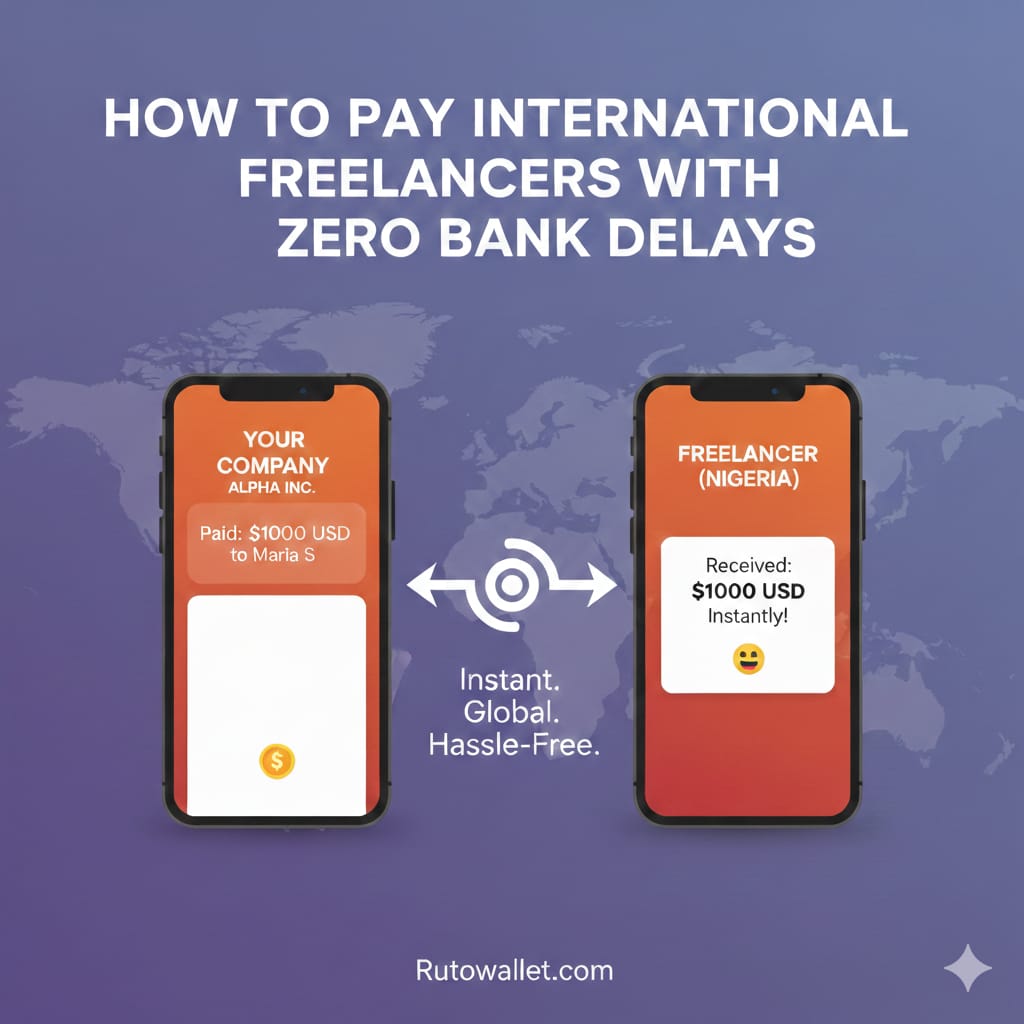
Every global business has a moment it dreads. The work is done. The deadline is met. The freelancer is waiting.
Then payment becomes the problem.
You open your bank dashboard expecting a simple transfer, only to see processing times, approval notices, and warnings that the money may arrive in three to five business days. The freelancer sends a polite message. Then another. Time passes, and what should have been a smooth transaction turns into tension, explanations, and frustration on both sides.
For freelancers, late payment feels personal.
For businesses, it feels unnecessary and embarrassing.
In a world where teams work across continents in real time, there is no reason money should move slower than email. There is no reason businesses should lose trust or talent because of outdated payment systems.
This is why more companies are changing how they pay international freelancers. Instead of relying on banks that delay and complicate global payments, they are using RUTO to send USDC instantly through WhatsApp, allowing businesses to pay workers in seconds rather than days.
This guide explains exactly how business owners can pay international freelancers with zero bank delays, why this method is faster and more reliable, and how it helps companies build stronger relationships with global talent.
Why Paying International Freelancers Is Still Broken
Banks were built for large institutions, not modern digital teams.
When you send money through a bank, it passes through multiple systems, approvals, and time zones before it reaches the person you are paying. Every step adds delay. Every delay creates tension.
For freelancers, late payment feels like disrespect, even when it is unintentional.
For businesses, slow payments damage relationships and reduce loyalty. Payment platforms promise speed, but many still depend on banks behind the scenes. That means weekends do not count. Public holidays cause delays. Exchange rates change without warning.
For companies working with global talent, this is not sustainable.
The Cost of Bank Delays for Businesses
Late payments create real damage because at the end, freelancers prioritise clients who pay fast. Top talent quietly leaves slow-paying companies. Trust erodes with every delay. Operations slow down when people wait for money.
Many founders underestimate this cost because it does not show up on a balance sheet. It shows up in missed deadlines, low morale, and broken relationships.
Fast payments are not a luxury. They are a competitive advantage that every business needs.
What Businesses Actually Need for Global Payments
Business owners do not want complexity. They want clarity, speed, and reliability.
They want to know three things.
- How fast will the money arrive?
- How much will it cost?
- Will the freelancer receive exactly what was agreed?
Anything that fails at these basics creates friction.
This is where USDC and RUTO change the system.
What Is USDC and Why Businesses Use It
USDC is digital money that always keeps the same value as the US dollar.
One USDC equals one dollar.
It does not change. It does not fluctuate.
This makes it ideal for salaries, project payments, and contractor fees.
When you pay a freelancer in USDC, both sides know exactly how much is being sent and received. There are no surprises. There are no silent losses through exchange rates.
For businesses, this creates predictability and trust.
How RUTO Helps Businesses Pay Freelancers Instantly
RUTO is a WhatsApp-based payment system that allows businesses to send USDC to freelancers instantly through simple messages.
There is no complex dashboard. There is no learning curve. There is no long setup process.
You pay freelancers the same way you communicate with them.
Through chat.
RUTO removes the gap between decision and payment.
Why WhatsApp Payments Make Sense for Businesses
WhatsApp is already used by most freelancers worldwide because they trust it, they check it daily, and they respond instantly.
By using WhatsApp, RUTO eliminates the friction of asking freelancers to download new apps or create unfamiliar accounts.
Payments feel natural. Communication and money happen in one place.
For businesses, this reduces onboarding time and confusion.
Step by Step: How to Pay International Freelancers With RUTO
This is how the process works in practice.
Step 1: Open WhatsApp and Message RUTO
You start by creating an account on Rutowallet.com and then linking your account with your WhatsApp number. You can then open WhatsApp and start chatting with RUTO. This conversation becomes your payment assistant and wallet.
You do not need technical knowledge. You simply type.
Step 2: Choose to Send Payment
You tell RUTO you want to send money.
RUTO responds with clear instructions and confirms the next step.
Step 3: Enter the Payment Amount in USDC
You enter the agreed amount.
RUTO shows the exact value and confirms it before sending. There is no guessing or recalculation.
Step 4: Enter the Freelancer’s Wallet address
You provide the freelancer’s WhatsApp number.
RUTO confirms the recipient clearly, reducing mistakes and errors.
Step 5: Review and Confirm
Before the payment is sent, RUTO shows a final summary.
Amount.
Recipient details
Delivery status.
Once you confirm, the payment is sent instantly.
What Freelancers Experience on Their Side
Freelancers receive payments quickly and clearly.
They are notified immediately, and they see and get the exact amount.
They do not wait days or weeks, and in turn, this creates trust.
Freelancers who are paid fast work better. They prioritise your projects. They stay longer. They recommend you to others.
Why This Is Better Than Paying Through Banks
Banks operate on schedules that do not match modern work. Sometimes, they delay payments on weekends. They pause on holidays and so many other things.
RUTO works at any time, day or night, weekday or weekend.
Money moves when your business needs it to move.
Why This Is Better Than Traditional Payment Platforms
Many platforms hide costs inside exchange rates. You are paying fairly, but the freelancer receives less. This damages trust over time.
With USDC and RUTO, the value stays clear. What you send is what they receive.
Transparency becomes part of your company culture. When it comes to security, you can rest assured of robust security measures to protect you.
RUTO confirms every transaction before it is completed. You see the details clearly, nothing is sent by mistake, and you stay in control.
For businesses handling frequent payments, this reduces risk and saves time.
Who Should Use RUTO for Freelancer Payments
RUTO is ideal for many types of people and businesses.
- Freelancers
- Agencies managing remote teams.
- Startups hiring global talent.
- Founders working with contractors.
- Companies paying freelancers regularly.
If your business relies on international workers, fast payments are not optional. They are essential.
The Future of Freelancer Payments
The future of work is global, and the future of payments must be instant.
Businesses that adapt early gain trust, loyalty, and speed.
RUTO represents that future with simple, clear, and fast payments.
Paying international freelancers should not feel like a risk or a delay.
Your business depends on people.
With RUTO, you remove bank delays, hidden fees, and unnecessary stress from global payments.
If you want to pay international freelancers instantly and build trust with your global team, it is time to change how you pay.
Visit rutowallet.com today. Connect your WhatsApp. Pay freelancers in seconds, not days.
Once you experience it, slow payments will no longer make sense.
Frequently Asked Questions About Paying International Freelancers With RUTO
What is the fastest way to pay international freelancers today?
The fastest way to pay international freelancers is by using USDC through RUTO on WhatsApp. Payments are sent instantly, without waiting for banks, business days, or international transfer approvals.
Why do bank transfers take so long when paying freelancers?
Bank transfers move through several systems and time zones before reaching the recipient. Each step adds delays, especially across countries. Weekends, public holidays, and internal reviews slow the process even more.
How does RUTO avoid bank delays?
RUTO does not rely on traditional bank systems for payments. Businesses send USDC directly through WhatsApp, allowing money to move immediately without waiting for bank processing times.
What is USDC in simple terms?
USDC is digital money that always has the same value as the US dollar. One USDC is always equal to one dollar. This makes it easy for businesses and freelancers to agree on payments without worrying about value changes.
Can freelancers receive payments without a bank account?
Yes. Freelancers do not need a bank account to receive payments through RUTO. They receive USDC directly through WhatsApp, making the process simpler and faster.
Is paying freelancers in USDC legal?
In most regions, paying freelancers in USDC is allowed, especially for international freelance work. Businesses should still follow local tax and reporting rules, just as they would with any other form of payment.
How secure is paying freelancers through WhatsApp with RUTO?
RUTO confirms every payment before it is sent and clearly shows all details. This reduces mistakes and ensures payments are only sent when the business approves them.
Can businesses pay multiple freelancers using RUTO?
Yes. Businesses can pay as many freelancers as needed, as often as needed, using the same WhatsApp- based system. This makes it suitable for agencies, startups, and growing remote teams.
Are there hidden fees when paying freelancers with RUTO?
No. RUTO shows payment details clearly before sending. Businesses know exactly how much they are sending, and freelancers know exactly how much they will receive.
Does RUTO work on weekends and holidays?
Yes. RUTO works at any time. Payments can be sent on weekends, at night, and during public holidays without delays.
Why do freelancers prefer instant payments?
Freelancers rely on a steady income. Instant payments help them manage bills, rent, and daily expenses without stress. Businesses that pay quickly build stronger trust and long-term loyalty.
Is RUTO suitable for small businesses and startups?
Yes. RUTO is especially useful for small businesses and startups that work with global talent and need a simple, reliable way to pay freelancers without complicated systems.
How does faster payment help businesses grow?
Fast payments improve freelancer satisfaction, reduce disputes, and attract better talent. When payments are smooth, businesses can focus on growth instead of solving payment problems.
Can RUTO replace traditional payroll systems?
For international freelancers and contractors, RUTO can serve as a simpler alternative to traditional payroll systems by removing delays and reducing administrative work.
What types of businesses benefit most from RUTO?
Agencies, tech startups, creative studios, consulting firms, and any business working with international freelancers benefit from faster, clearer payments using RUTO.
How long does it take to start using RUTO?
Getting started takes only a few minutes. Businesses connect their WhatsApp and can begin sending payments immediately without long setup processes.