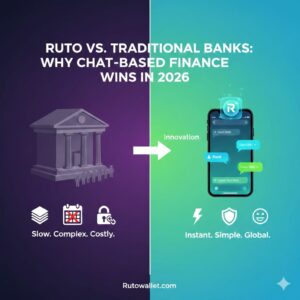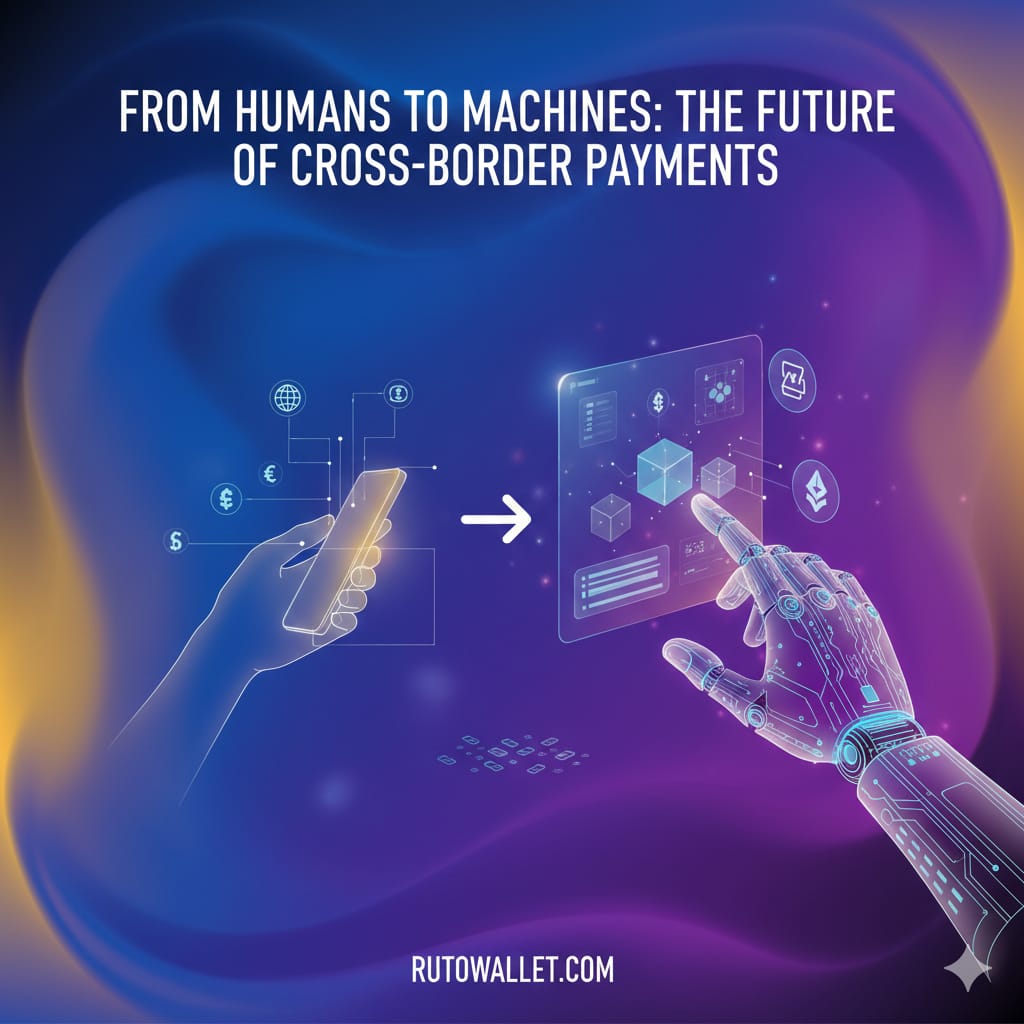
The future of cross-border payments is real-time, AI-enabled infrastructure like RUTO that removes bank delays and allows instant global value transfer between people and machines. Instead of relying on slow international wires, programmable systems now enable real-time global payments across borders without friction.
For centuries, moving money across borders has required permission. Permission from banks.
Permission from intermediaries.
Permission from clearing houses and compliance desks, and institutions that were built in a slower era.
Even when payments became digital, the structure underneath remained unchanged. International transfers still moved in batches. Still passed through multiple institutions. Still paused on weekends. Still stalled at borders.
Meanwhile, the world changed. Work became global. Commerce became instant. Communication became real-time.
But money remained trapped in yesterday’s infrastructure.
Now something fundamental is shifting.
Cross-border payments are no longer just human actions. They are becoming system actions. Machine actions. AI-triggered decisions executed without delay.
The future of cross-border payments will not be defined by faster wires.
It will be defined by programmable remittance systems that operate continuously, across borders, without waiting for approval windows. The question is no longer whether this shift will happen. The question is which infrastructure is built to support it.
Why Cross-Border Payments Are Still Broken
Traditional international payments rely on correspondent banking networks.
That means:
- Multiple intermediary banks
- Layered compliance checks
- Settlement delays
- Opaque exchange spreads
- Weekend processing gaps
Even in 2026, sending money from one country to another can take days.
For individuals, that creates frustration. For businesses, that creates operational inefficiency. For AI-driven systems, that creates failure.
The current infrastructure was designed for human-paced finance. The modern economy operates at machine pace.
The Shift From Human-Initiated to System-Initiated Payments
Historically, cross-border transfers required a human to:
- Log into a banking portal
- Fill out international transfer details
- Confirm exchange rates
- Submit the request
- Wait for processing
The next phase is different.
Payments are increasingly triggered by rules, automation, and AI.
Examples include:
- A procurement system paying overseas suppliers automatically once delivery is confirmed.
- A global payroll engine settling contractor payments across five countries instantly.
- An AI commerce assistant purchasing digital services across borders in real time.
- A content platform paying creators in multiple regions the moment revenue clears.
These are not theoretical use cases. They are becoming standard.
Real-Time Global Payments Are No Longer Optional
Speed is not just convenience.
In cross-border commerce, speed affects:
- Vendor trust
- Cash flow stability
- Operational efficiency
- Competitive advantage
When payments settle instantly:
- Freelancers trust platforms more.
- Suppliers ship faster.
- Remote teams feel secure.
- Businesses scale globally without administrative drag.
Real-time global payments eliminate the invisible tax of waiting.
The Role of AI Fintech Infrastructure
AI fintech infrastructure refers to financial systems designed to operate programmatically, securely, and globally.
This infrastructure must:
- Enable automation
- Provide instant settlement
- Maintain compliance visibility
- Support machine-triggered execution
- Remain transparent for human oversight
Traditional banking rails struggle to support this model efficiently because they rely on sequential, institution-based clearing.
Programmable remittance systems operate differently.
They allow value to move instantly once defined conditions are met.
Programmable Remittance Systems Explained
A programmable remittance system allows payments to be executed automatically based on predefined rules.
For example:
- If the monthly payroll date arrives, distribute funds globally.
- If invoice validation succeeds, settle the cross-border payment instantly.
- If the supply inventory drops below the threshold, reorder and pay the supplier overseas automatically.
- If performance targets are hit, allocate bonus payments internationally.
These systems remove manual bottlenecks. They also reduce human error. When rules are defined clearly, execution becomes predictable.
How RUTO Aligns With the Future of Cross-Border Payments
RUTO’s chat-based, real-time architecture aligns with this shift because it prioritises:
- Instant settlement
- Borderless functionality
- Clear transaction visibility
- Programmable execution
- Secure backend management
Instead of relying on multi-day banking corridors, RUTO enables cross-border value transfer in real time.
Both humans and AI systems can trigger transactions through structured commands.
The infrastructure supports scale without introducing additional layers of friction.
Why Machine-Speed Commerce Requires Machine-Speed Payments
The global economy is increasingly automated.
AI systems:
- Manage digital advertising spend
- Optimise logistics
- Coordinate global hiring
- Execute procurement
- Monitor revenue streams
If payment infrastructure lags behind operational systems, inefficiencies compound.
Delayed cross-border settlement disrupts automated supply chains.
Machine-speed commerce requires payment systems that operate at the same velocity.
That is the direction of the industry.
Transparency in a Borderless Environment
One of the long-standing problems with cross-border payments is opacity.
Senders often do not know:
- The exact exchange spread
- The intermediary deductions
- The final arrival timeline
Programmable infrastructure provides clarity:
- Defined transaction amounts
- Instant confirmation
- Structured transaction logs
- Real-time visibility
Transparency strengthens trust. Trust strengthens adoption.
Compliance in the Next Era of Global Payments
Modern cross-border systems must operate within regulatory frameworks while remaining efficient.
AI fintech infrastructure does not eliminate compliance. It integrates it into automated systems.
Instead of manual review slowing transactions unpredictably, structured compliance checks operate within programmable logic.
This preserves regulatory standards while maintaining real-time global payments capability.
Balance is essential.
Cross-Border Payments Beyond Humans
The most significant shift is not faster remittance for individuals.
It is the expansion of cross-border payments into machine ecosystems.
Machine-to-machine payments will include:
- AI services purchasing compute resources internationally
- Automated marketplaces settling transactions instantly
- IoT systems paying for services globally
- Platforms distributing earnings across borders in real time
These interactions cannot rely on traditional correspondent banking delays.
They require infrastructure built for automation.
Why Businesses Must Adapt
Companies operating globally must choose between:
- Legacy systems with predictable delays
- Real-time infrastructure designed for automation
As AI-driven operations expand, cross-border payments will become continuous rather than periodic.
The businesses that adopt programmable remittance systems early will:
- Improve vendor relationships
- Increase operational speed
- Reduce financial overhead
- Expand globally with less friction
Infrastructure determines agility.
The Psychological Shift in Global Commerce
For decades, sending money across borders felt heavy.
Now it is becoming invisible.
When payments settle instantly:
- Teams collaborate without hesitation.
- Global hiring expands naturally.
- Suppliers trust international partners.
- AI systems execute commerce autonomously.
The future of cross-border payments is not just about speed.
It is about removing hesitation.
International wires defined the last century of global finance.
Programmable remittance systems will define the next.
Real-time global payments supported by AI fintech infrastructure will replace slow, multi-layer banking corridors.
As commerce shifts from human-triggered transactions to machine-executed decisions, cross-border value transfer must evolve.
RUTO aligns with this transition by offering real-time, programmable, borderless payment capabilities designed for both people and intelligent systems.
The future is not incremental improvement.
It is a structural replacement.
Frequently Asked Questions
What is the future of cross-border payments?
The future of cross-border payments is a real-time, programmable infrastructure that allows instant global value transfer without relying on multi-day bank wires.
What are programmable remittance systems?
Programmable remittance systems allow payments to be executed automatically based on predefined rules, enabling instant cross-border settlement.
Why are traditional international transfers slow?
Traditional transfers move through multiple intermediary banks and clearing systems, creating delays and limited transparency.
How do real-time global payments work?
Real-time global payments use modern financial infrastructure that settles transactions instantly across borders rather than relying on batch-based banking networks.