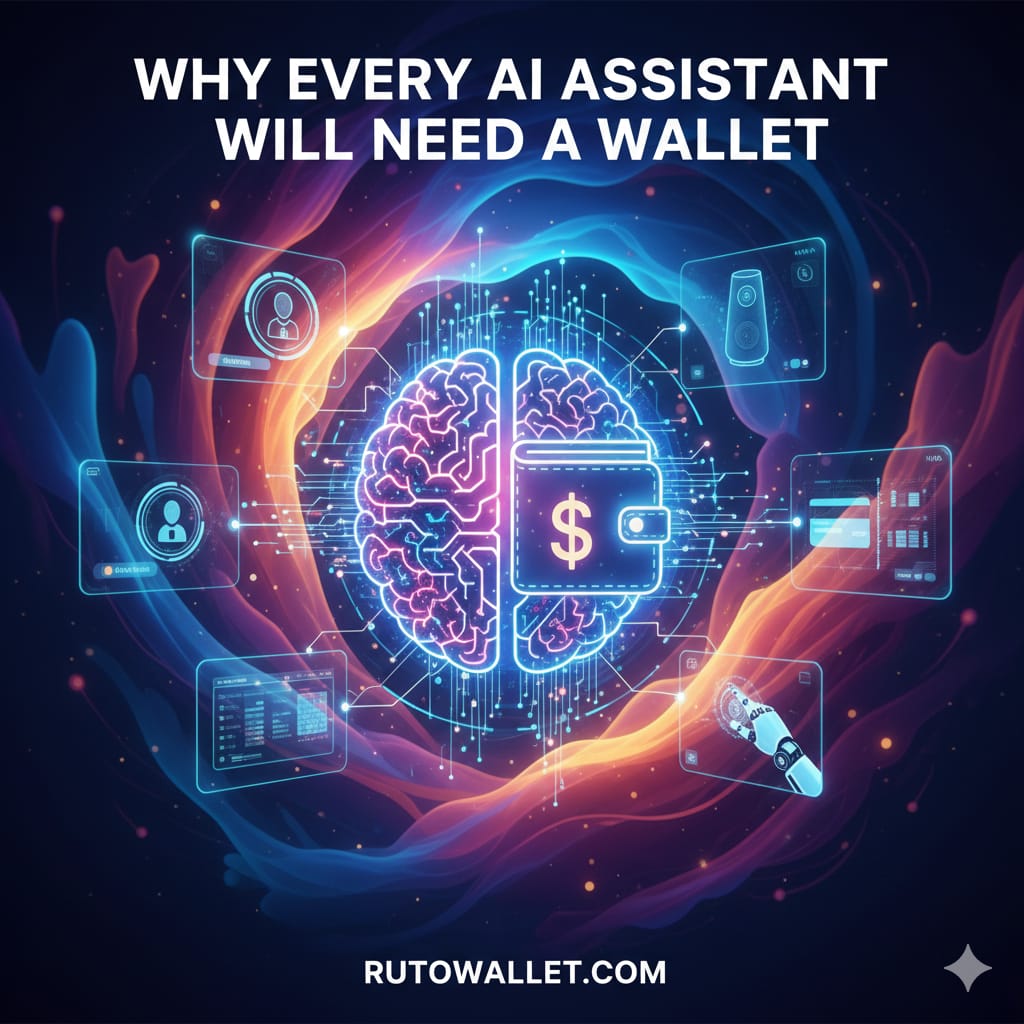
The Missing Layer in Artificial Intelligence
Artificial intelligence now manages calendars, drafts contracts, books flights, negotiates subscriptions, and coordinates global workflows with impressive precision and contextual understanding. AI assistants have evolved from simple chat tools into decision-making copilots that operate across professional and personal environments. They analyse data continuously, interpret intent accurately, and execute tasks efficiently across platforms.
Yet one critical limitation remains obvious and increasingly urgent.
Most AI systems still cannot move money independently.
They can recommend a flight confidently. They can compare insurance plans intelligently. They can negotiate software pricing strategically. However, they still depend on human approval inside traditional banking applications that interrupt automated workflows and slow commercial execution dramatically.
This limitation creates friction inside otherwise seamless digital ecosystems and exposes a structural gap in AI commerce payments infrastructure.
That gap is the wallet layer.
And in 2026, every serious AI assistant will require one.
The Rise of Autonomous Financial Systems
AI systems no longer operate as passive tools that simply provide information on request. They function as proactive agents capable of initiating actions, optimising decisions, and coordinating transactions across multiple digital services simultaneously.
Businesses already deploy AI copilots to manage travel bookings, oversee vendor payments, renew subscriptions, and monitor operational expenses in real time. Consumers increasingly rely on AI assistants to track spending patterns, compare prices dynamically, and recommend smarter financial decisions based on contextual data.
This shift marks the beginning of autonomous financial systems that combine intelligence with execution rather than intelligence alone.
However, execution requires payment capability.
Without integrated wallets, AI remains advisory rather than operational. With wallet integration, AI becomes transactional infrastructure.
Why Traditional Banking Cannot Support AI Commerce
Traditional banking systems were designed around human-initiated transactions that involve manual approvals, form-based inputs, and delayed settlement processes. These systems assume deliberate user interaction and structured verification steps that slow down automated decision cycles.
AI commerce payments demand the opposite structure. They require:
- Real-time authorization
- Instant global settlement
- Embedded transaction execution
- Programmatic security controls
- Continuous identity validation
Banking applications built for human navigation cannot efficiently support machine-speed commerce. Approval flows interrupt automation cycles and delay execution windows that AI systems identify as optimal.
AI requires financial rails that match its operational velocity.
What AI Wallet Integration Actually Means
AI wallet integration refers to embedding secure payment capabilities directly inside assistant frameworks so that financial decisions and execution occur within the same conversational environment.
Instead of recommending an action and redirecting users to separate applications, the assistant can complete transactions securely within its own interface.
This integration enables assistant-based payments that operate through structured identity verification, encrypted authorisation layers, and real-time confirmation systems.
The result is seamless financial execution aligned with intelligent decision-making.
The assistant does not simply advise.
The assistant acts.
The Commerce Layer of the AI Economy
The AI economy is expanding across sectors, including travel, logistics, healthcare, remote work, and digital services marketplaces. AI systems now negotiate vendor contracts, compare supplier pricing, and allocate budgets based on predictive modelling and real-time analytics.
Each of these decisions ultimately requires payment execution.
Without an embedded wallet, the AI must pause and wait for human intervention inside traditional banking platforms. This delay reduces efficiency and weakens the economic value of automation.
With integrated wallet functionality, AI systems can:
- Book flights instantly
- Renew subscriptions automatically
- Pay contractors globally
- Execute cross-border settlements
- Optimise payment timing dynamically
Autonomous commerce becomes practical rather than theoretical.
Security Requirements for Assistant-Based Payments
Payment authority inside AI systems demands sophisticated security frameworks that combine identity validation with distributed cryptographic protection.
Modern AI wallet integration relies on:
- Multi-factor authentication layers
- Device bound authorization systems
- Behavioural anomaly detection
- Encrypted transaction routing
- Real-time fraud monitoring
These security measures create structured guardrails around automated execution while preserving speed and usability.
Autonomous financial systems require predictable safeguards that operate continuously rather than intermittently.
Security becomes embedded rather than reactive.
Why RUTO Represents the Logical Payment Layer
RUTO operates as a chat-based wallet infrastructure designed for conversational execution environments. Its architecture aligns naturally with assistant-based workflows and AI-driven task management systems.
Unlike traditional banking apps that require form-based navigation, RUTO enables real-time global payments directly inside messaging interfaces that AI assistants already use.
This alignment creates several strategic advantages:
- Instant transaction capability
- Identity-backed access control
- Reduced operational friction
- Cross-border settlement efficiency
- Conversational payment confirmation
RUTO functions as infrastructure rather than an external destination, which makes it compatible with AI wallet integration models at scale.
AI Commerce Payments and Global Reach
AI systems operate across borders without geographic limitations. They coordinate suppliers in different countries, manage remote teams across time zones, and negotiate services within global marketplaces.
Payment infrastructure supporting AI must reflect that global scope.
RUTO enables instant global payments through messaging platforms, eliminating delays associated with correspondent banking networks and manual verification pipelines.
This capability strengthens autonomous financial systems by ensuring that execution speed matches decision speed.
Global AI commerce requires borderless payment rails.
The Strategic Implications for Fintech 2026
Fintech trends in 2026 increasingly emphasise embedded finance, conversational interfaces, and AI-native infrastructure. Standalone applications lose strategic importance as digital ecosystems converge around integrated service layers.
AI wallet integration represents the next stage of this convergence.
Assistants that cannot execute payments will operate at a competitive disadvantage compared to those that control full transactional cycles.
Financial infrastructure, therefore, becomes a foundational requirement for advanced AI platforms rather than an optional extension.
The assistant economy demands embedded payment intelligence.
The Economic Logic of Wallet-Enabled AI
From an economic perspective, automation generates maximum value when it reduces both cognitive load and execution delay. AI assistants already reduce cognitive burden by analysing information rapidly and presenting optimised decisions.
Adding wallet capability reduces execution delay by eliminating manual approval bottlenecks and platform switching requirements.
This combination increases productivity for:
- Small businesses managing vendors
- Enterprises coordinating global payroll
- Freelancers handling subscriptions
- Consumers optimising recurring expenses
Autonomous financial systems, therefore, increase economic efficiency at both individual and organisational levels.
Human Trust and Controlled Autonomy
Public adoption of AI commerce payments depends on transparent authorisation frameworks and clear transactional visibility. Users must understand how assistants execute payments and maintain control over spending parameters.
RUTO’s conversational model supports this requirement by allowing payment explanations, confirmations, and transaction histories inside familiar messaging environments.
This structure strengthens trust while preserving automation benefits.
Assistant-based payments succeed when users feel informed rather than excluded from financial decision flows.
The Inevitable Convergence
The convergence between artificial intelligence and financial infrastructure follows clear technological logic. AI systems generate intent, evaluate options, and determine optimal actions. Payment systems execute the economic consequences of those actions.
Separating intelligence from execution creates inefficiency.
Integrating them creates autonomous commerce.
AI wallet integration, therefore, represents not an experimental feature but an inevitable structural evolution within digital economies.
Every advanced assistant will require the ability to move value securely and instantly.
AI assistants require integrated wallets like RUTO to execute payments securely in real time, enabling autonomous commerce without relying on slow traditional banking systems.
The rise of AI commerce payments marks a transition from advisory intelligence to operational intelligence. Assistant-based payments transform artificial intelligence into a fully capable economic actor within autonomous financial systems.
In 2026, intelligence without a wallet becomes incomplete infrastructure.
And every AI assistant that intends to operate at scale will need a secure, embedded, real-time payment layer powering its decisions.